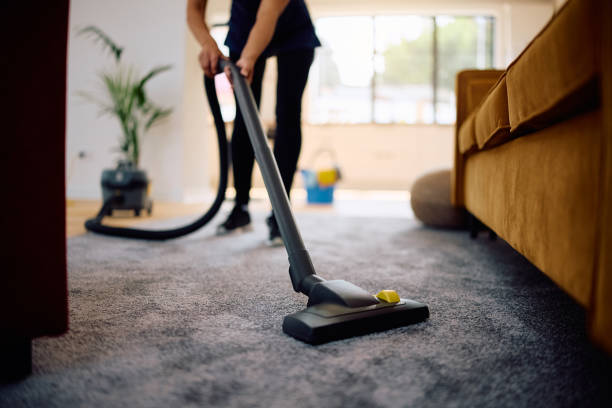
Littleton is one of the Denver metro’s most layered communities — a city whose residential history spans from the mid-twentieth century through the present, producing a housing stock that encompasses original 1960s ranch homes in Columbine and Centennial Estates, mid-era development in Ken Caryl and Heritage Hills, and contemporary construction in newer areas adjacent to the expanding South Denver metro. This span of housing eras creates a floor care environment of genuine complexity — original hardwood that predates polyurethane, natural stone tile requiring pH-neutral chemistry, mid-era ceramic with decades of Denver Water mineral accumulation, and modern LVT facing the same hard water challenge from its first day. Standard uniform cleaning approaches fail Littleton homeowners not because the equipment is inadequate, but because the knowledge behind the approach is not calibrated to what the floors actually are.
The Original Hardwood Identification Imperative
Littleton’s 1960s and 1970s housing stock — concentrated in Columbine, Centennial Estates, and the older neighborhoods around downtown Littleton — carries original hardwood floors that were finished with paste wax at installation. These wax finishes produce floors that are beautiful, authentic, and permanently damaged by the water-based cleaning chemistry that has become the modern industry standard.
The damage pathway is straightforward: water-based cleaning products applied to wax-finished hardwood dissolve the wax protective layer, exposing bare wood to direct contact with whatever cleaning chemistry follows. The result is cloudiness, grain raise, and in many cases complete finish failure that requires sanding and refinishing to correct. This damage cannot be reversed by any cleaning process — it is structural alteration of the wood surface that only refinishing addresses.
For Littleton homeowners in pre-1978 construction, the question before any hardwood cleaning — professional or DIY — is which finish type the floor carries. The water-drop test provides the answer in two minutes: drops of water on the surface that bead and remain on top indicate polyurethane or similar hard coat; drops that absorb into the surface or darken the wood indicate wax or penetrating oil that requires dry-chemistry cleaning only. This test should be performed before any cleaning product is applied, by the homeowner before hiring and independently confirmed by any professional service before beginning work.
Natural Stone in Littleton’s Premium Neighborhoods
Ken Caryl, Heritage Hills, Bow Mar, and Roxborough Park represent Littleton’s premium residential communities — larger homes, higher-quality finishes, and in many cases natural stone tile installations in bathrooms, kitchens, and entryways that require specifically calibrated professional care. Travertine, marble, slate, and limestone — common choices in these neighborhoods’ price range — are chemically reactive to acidic cleaning products in ways that permanently alter their appearance.
Travertine and marble, being calcium carbonate-based stones, are etched by acid-based cleaners. The characteristic acid-based descaling chemistry used to address Denver Water mineral deposits on ceramic and porcelain tile will etch travertine and marble permanently, creating dull, matte patches that cannot be polished out without professional stone restoration. Natural stone in Littleton’s premium neighborhoods requires pH-neutral cleaning chemistry that removes organic soil and addresses mineral film without introducing acid that damages the stone surface.
Slate, which is less chemically reactive to acid than calcium-carbonate stones, carries different vulnerability: porous structure that absorbs cleaning products deeply if not properly sealed, and surface texture that makes contamination assessment difficult without professional inspection. Roxborough Park homes, in particular, often feature slate and sandstone tile choices that reflect the community’s connection to the natural red rock landscape surrounding it.
The practical requirement for Littleton homeowners with natural stone tile is professional cleaning by technicians who explicitly identify stone type before applying any product — not a technician who applies the same tile cleaning protocol to every surface in the home.
Denver Water Minerals Across Littleton’s Full Housing Span
Denver Water serves Littleton throughout its service area, and the hard water mineral accumulation challenge described throughout this guide applies to every Littleton neighborhood from Columbine’s 1960s homes to Roxborough Park’s contemporary construction. The difference is the starting baseline: older Littleton homes may have accumulated 40-50 years of mineral deposits on original tile, while newer homes begin their accumulation cycle from installation day.
For Littleton’s original 1960s-70s ceramic tile, the mineral accumulation history may be so extensive that professional descaling reveals a floor in far better condition than its appearance suggests. For newer Littleton tile, establishing a professional descaling maintenance cycle before significant accumulation develops protects the appearance of materials that are often more expensive than original-era tile.
Colorado Choice Carpet Cleaning serves Littleton’s full housing span with surface identification before any chemical is applied, natural stone pH-neutral chemistry as a distinct service protocol, and Denver Water mineral descaling calibrated to the specific accumulation history of the property. Their IICRC certification, 300+ customer approvals, and satisfaction guarantee provide appropriate assurance for Littleton’s sensitive surface requirements. Call (720) 730-8055 or use the current three-room promotional rate of $119.